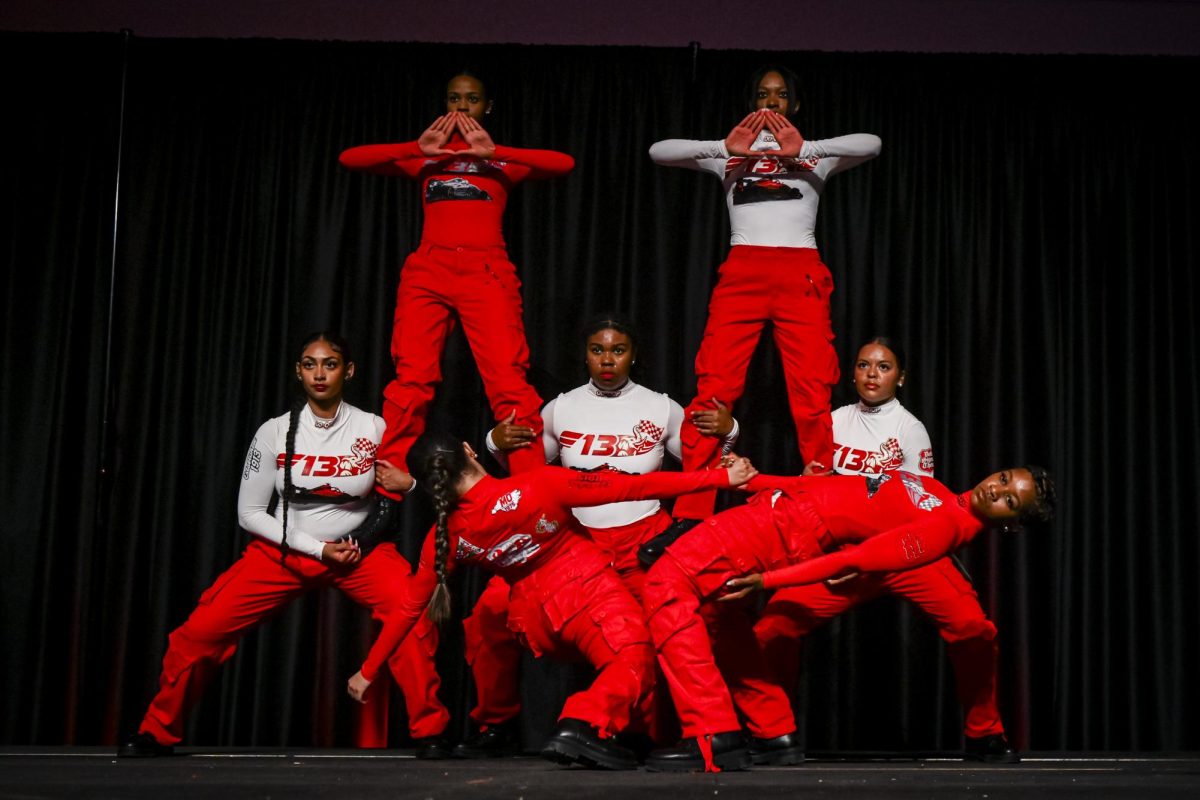
Don’t go anywhere because the African Student Union (ASU) took us all the way back to 2016 at this year’s African Night! The event took place at 7:00 p.m. on Saturday at Nelson Hall.
The auditorium was filled with people dressed in traditional African wear, formal wear and traditional dance attire. Family, friends and performers from all over NC showed up and showed out for the event. The room was teeming with a mishmash of culture and generations. ASU’s Annual Africa Night is an evening full of performances that exemplify African music, fashion, beauty and more.
The theme of the night was highlighting the iconic time of 2016. The night’s MC and student from NC A&T, Shemi Bukoye, began getting the crowd riled up and hype alongside DJ AMP, who chimed in every now and then with “Bruh” adlibs.
Then, MC Bukoye formally introduced us to the night’s first scene of the skit. Interjected between the night’s cultural performances were 10 powerful scenes featuring Young Kofi, a kid navigating being African in high school during 2016.
Following the first skit, we entered a model segment then got to know this year’s Ms. and Mr. ASU contestants. The 2016 models were dripped out in the best fashion styles of the era. They wore skinny jeans with checkered patterned flannels, Supreme tees, “Chief Keef” inspired fits — the best drip of the decade. After the 2016 model segment, we got right back into the next skit.
Introducing: The Story of Young Kofi
Young Kofi constantly faces adversity because of his culture. People don’t like foreign things; Kofi and his Ghanaian culture was one of them.
In one of the first scenes, set in their classroom, we see the friends of Kofi’s crush, Aisha, tell her not to talk to Kofi because he is an “African booty scratcher.” The African experience is shown as one looked down upon; African persons in 2016 were synonymous to a funny accent, ebola and booty scratcher.
Enter Marcus: Kofi’s biggest hater, bully and class disruptor. Kofi was tired of people like Marcus making fun of him for being African; he was tired of being called weird and other names.
Kofi’s parents were described as your stereotypical African parents: loud, quick to anger and dramatic. After being bullied, he came home pants sagging, making the mistake of not greeting his elders as he blasted loud rap, all to try to fit in with his classmates.
His parents didn’t understand his desire to change — specifically, the shame surrounding his identity — and the same goes for his friends and Aisha. He went from being himself, to changing to be someone else, and yet it was not enough for anyone; it’s never going to be enough. But your identity doesn’t have to be enough for others, it just has to be enough for you.
It took him a while, but he came to understand that it doesn’t matter what he does; people will judge nonetheless. With the scenes building to a peak, it was Kofi’s time to present who he truly was without reservation; he isn’t the one who needed to change — it’s society.
Prior to the final scenes, the models came out in the most beautiful traditional wear — embodying African beauty and pride. After this traditional model segment, we got right back into the next scene.
Presentation Kofi changed back to the “old” him with his glasses and nerdy fit. He also presented his pride for his culture and country: Ghana. Finally, at the climax, he showed Marcus who is boss ‘cause he had it coming. The students and teacher tried to break them apart and the curtains closed, but we all knew who won that fight.
After seeing the history of young Kofi — present day Kofi was powerful. He was shown as a self-assured young man who takes pride in his culture regardless of what others say. And I’m happy to report he got the girl in the end by being himself.
The Night’s Close
The night ended with a presentation of African countries and a collection of African flags. While people were repping their countries, the flags of Cameroon, Kenya, South Africa, Liberia and more flew across the stage. This was a celebration of African culture.