HISTORY
In 1971 Augustus McIver Witherspoon became the second African-American man to receive a PhD from NC State. Dr. Witherspoon was NC State’s first Black professor. That was only the start of the man who made a great impact on our campus for 23 years. To understand the legacy he left behind, you also need to know the history of the African American Culture Center or the (AACC).
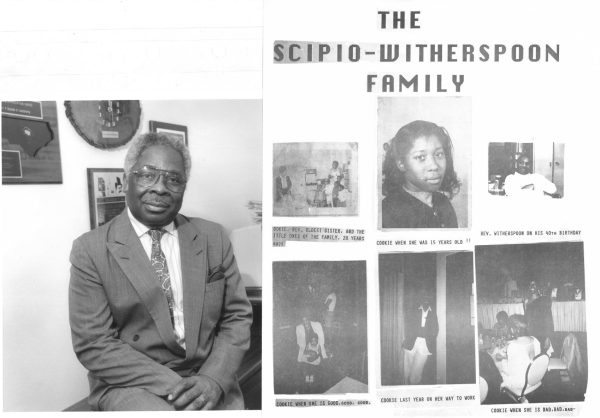
The AACC’s first iteration was formed in 1970 after many student requests alongside the support of Dr. Witherspoon. The center was first formed in the old YMCA building, also known as the King Religious Center. This building has since been demolished and was replaced with Kamphoefner Hall.
In 1974, students requested a new space, and Dr. Lawrence M. Clark was hired at NC State. NC State hired Dr. Clark for his mathematics expertise and his role as Assistant Provost for Affirmative Action. Dr. Clark introduced and implemented the idea of having an African-American Coordinator in each college. He also helped initiate the first African-American
Symposium. Together, both professors created a program for African-American youth development in math, science and the arts.
In 1978, students requested a new location for the AACC. Then-Student-Body- President Terry Carroll presented a request to then-Chancellor John T.Caldwell, his request included for the first floor of the Print Shop to be turned over to the Society of Afro-American Culture for an African American Cultural Center. Banks C. Talley, the Dean of Student Affairs during this time, complied with this request.
For a few years, the AACC stayed on the first floor of the Print Shop. However, in the early 1980s, many students complained about the conditions of the space. After enough calls, in the late 1980s, the university decided to build an entirely new building: the Student Cultural Center
Annex.
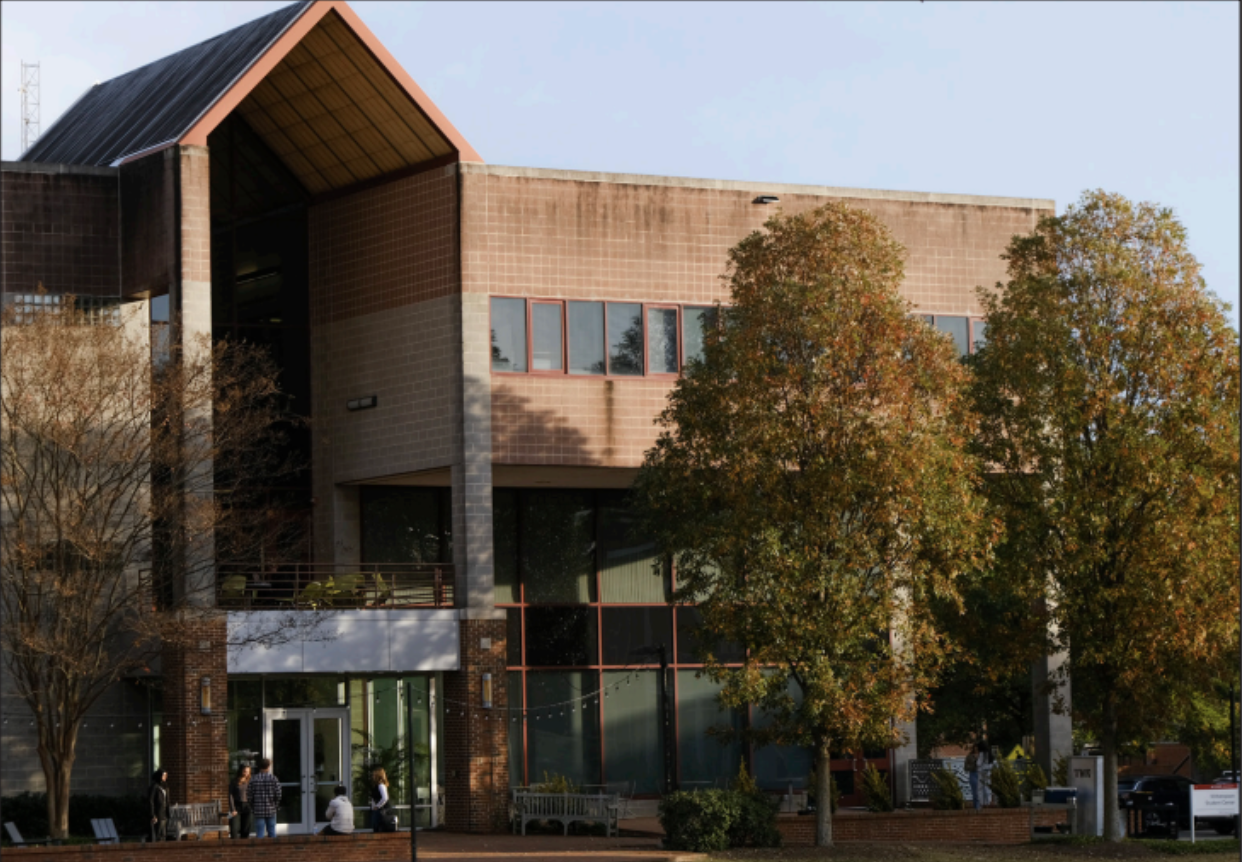
In 1991, the AACC moved to the Student Center Annex and opened for students. On June 6, 1994, Dr. Augustus McIver Witherspoon passed away at 63 after a battle with cancer. In 1995, the building was named after Dr. Witherspoon. 30 years later, the 55-year-old AACC building holds his name and legacy to this day.
PRESENT-DAY
Which begs the question: how is the legacy holding up? To answer this question, we asked the current director of the African American Cultural Center, Dr. angela gay-audre, for her insight.
TNM: How has the center fostered a sense of belonging to the community among African- American students and faculty over the years?
Dr. angela gay-audre: All right, so I’ll talk about this historically, present day, and then where we currently stand. So historically, the African American Cultural Center was created out of a need — a necessity for students to have a place to gather.
The Cultural Center — if you’re familiar with the history — it moved all over campus. It’s one of the favorite things. When alumni come back, they’d be like, “I used to be over there.” And they have a whole conversation about, “You remember when we were over there in that building?” And listen, honey, I just got here in 2020. I don’t know about all those places, but I do know the history and how.
The Cultural Center was created from a need of students to have a place for community, for communal gatherings like what you see in our living room right now. To talk, to be in conversation, to know themselves through the lens of being in relationship with other people who had similar interests, shared values and ways of existing in the world.
And that could be something like you being an artist and trying to consider art in different ways and wanting to talk about fiction or books or whatever, right? Or an introvert gathering. It looks like a lot of different things, but that was the need.
And so back in the 70s, just like we saw across the country in the 70s, there were so many movements for students to gather together in places and spaces and to do placemaking in a way that offered them a sense of solace and peace.
It’s like that moment when you walk into your house and you feel a weight fall off your shoulders. When you drop your bag, your purse, whatever it is you’re carrying, you start to move through your house. And the closer you get to your place of comfort, the lighter your load feels. That’s what the Cultural Center has always been for students, and that’s what it continues to be.
So when we think about present day, what I also add to that is we do that and we offer that for all students. But we also always have, since the culture center got a budget in 1996. And I say that because when we got the budget in 1996… that budget was student fee funded. And that
means that every student at NC State who was enrolled, paid for the salaries and for the programming that happened in the Cultural Center. And when every student pays, every student gets the opportunity to benefit from it.
And so when we think about belonging, when we think about placemaking, it is that piece of us that is searching for another human being to see us, to affirm us, to make us feel worthy, to not just be in a transaction but something that can transform us. Like the ways that we might get a recommendation for a good place to eat, or the welcoming in and saying, “Hey, get a plate, sit down, let’s have aconversation.”
That’s what belonging looks and feels like in spaces like the African American Culture Center. It’s that feeling of home. It’s that feeling of release. It’s the feeling that I can be here and not be judged and I can still be seen as worthy. I can try and I can fail. And nobody’s gonna make me feel like I’m inferior if I don’t belong.
TNM: How have the alumni who have engaged with the center during their time at NC State carried its influence into their future lives?
Dr. angela gay-audre: Yeah, I hear so many stories from alumni of NC State who are connected to the Cultural Center. First, I’ll say Mama Toni Thorpe; I’mma always bring her to the forefront. She was the first. Well, she’ll say she’s not the first. She was the first full-time [program coordinator]. But there was someone who was half-time before her, but [she was] the first full-time program coordinator in the Cultural Center. And the work that she did — and I ain’t gonna say work just like the physical things, administrative work, but the hard work — the emotional work, the ways that people affectionately call her Mama Thorpe. Right? Because she is indeed a mother to all.
One of her key things, is a hug that she gives that makes people feel like they have been loved for their entire lifetime. That’s how deep, and long and soft her hugs really are. And that work that she did — which is really her putting herself into everything she did, into every person she met. She never met a stranger; she never met a person that she couldn’t care for. That’s the real work of cultural centers, right? And so that legacy, her legacy, continues to live on in every single person.
And that’s why I say, “When the Culture Center got a budget,” because she was one of the first people to be hired into that budget, it served all students. There’s not a single person on this campus who was here during the tenure of Mama Toni Thorpe — who regardless of their race, their culture, their Identity, their legacy, their lineage, their heritage — who don’t know who she is, who do not feel loved and cared for by her. And so that is a part of the alumni experience, right? It is that feeling of love and warmth, and when her name is evoked in a place… that evokes a memory of being cared for, and being pushed into possibility; right? That’s one part of it. But then it’s that place where people, again, felt like they belonged.
They gathered together in this space. They had parties [in what] they used to call the Culture Center, way back before we were here in Witherspoon, the Sweat Box, because they were partying. You know, that picture that goes across Black culture, and it’s all the Black folks dancing, and their bodies are moving in waves, you know?
That’s what I imagine the Cultural Center was for them way back when they called it the Sweat Box. I imagine it was a place of nothing but pure joy and living and being and existing and releasing all at the same time.
And so that’s something that they pulled with them, that moment where they could just release, and be free and have nothing but joy. And let’s be real, the 1970s were not an easy place for some of those students to exist. And therefore, them being able to find that joy and still be able to reflect on it, right now, present day, is pretty powerful.
Then I can think about those who didn’t know where they wanted to go, what they wanted to be, who they wanted to be. And that’s important, too, because the Culture Center gave them a place of being able to define and redefine and reimagine their identity.
And through that, they come back, and the reflections, the stories they tell are like, “This is how I decided I wanted to go into this field. This one interaction, this program, this conversation, this one single instant, this moment in my life created a pathway for me to explore myself in a way that I never knew was possible and to not be afraid and to just do the thing.” That’s the impact of the Culture Center for those who engage with it, for people who pull it and take it in.
I was just listening to what’s on the table conversation, and some of the students and a few of the students named the Culture Center. I think one of the questions, like, “What’s the place on campus you feel safe or you feel good or whatever?” And a few of the students started talking about the Cultural Center, just like, “yeah, this is a place where I’ve been able to deepen connections. And by deepening those connections, I deepen the relationship I have to myself.”
That’s pretty damn powerful. So that’s what I expect. So when they come back, I’m curious to hear, as an alum of the university and coming back to this campus, coming back to this place that they get to co-create alongside us, what that impact will mean for them in the future.
TNM: Can you provide specific examples of some programs that the center provides?
Dr. angela gay-audre: So first, I’mma a brag on our symposium. We have a symposium on Afrofuturism and diasporic scholarship. This was particularly born out of a need to be able to create space for folks who are doing creative, innovative and intentional work that allowed them to tap into the wholeness and fullness of who they are as individuals, as scholars, as researchers, as storytellers and be able to share that out in a way that’s still valued and be able to get feedback on it, to feel affirmed in it and to see themselves as scholars, researchers and thought leaders in the field.
And so it’s an opportunity for students to share their research, the papers they’re writing in class, the things that they’re already doing, the ways that they’re thinking about the world or world-changing, world transformation. So it’s pretty cool to see students share in such a brilliant way— and then they get to do it alongside faculty and staff. And then, it’s also peer reviewed, which means they can put it on their resume and they can say, I presented a peer-reviewed paper workshop, storytelling session, sister circle, whatever it might be at this conference.
And I can’t tell you how many times that has been such a powerful experience for a student, undergrad or graduate. Then we also have things like Harambee, which is about unity. And it creates space for students to learn about campus resources, to get connected to campus resources. We do things like Kwanzaa, which we actually have our next Kwanzaa next Friday. We celebrated a little bit early because we’re not here during the time that Kwanzaa is celebrated, so that’s a yearly celebration.
And we also have our Ebony Harlem Awards. That is a celebration of culture, of inspiration, of the ways that people share their gifts with one another on this campus at NC State. That’s at the end of the year … I think it’s gonna be open, build later. But Ebony Harlem is in April. So, yeah, we have what’s on the table. And that was something developed by Mama Toni Thorpe, like the need for students to be in conversation. I could go on and on, talking about the magnificent work that my program team does — even our library.
And I don’t want to underchange that, our library has more than 7,000 books in its collection. We’re constantly adding technology. We have a meditation grounding room for students to use. We have a study space. We are one of the only, outside of the libraries themselves, one of the largest affiliate libraries in a student success unit. Not one of; We are the only. Like, we are the largest.
And so it is a library, a healthy library, all on its own. And it opens space up for students to be exactly who they are, to connect in ways that are important for them to not feel like they have to be anything other than who they want to be in that moment. And that’s one of the beautiful things. Then we also got study rooms down the hallway. We are such a large space, but it is so powerful because students can go into any nook and cranny of this center and find whatever they want to find for themselves.
TNM: Do you have a message for any students who might not know about the center?
Dr. angela gay-audre: Come and see. Come and create, come and be, come and exist come and reimagine — come and sit in your possibility. Just come. You can create this space, and you can create yourself in this space however you want to. That’s the joy and the magic of the Cultural Center. If you’re extroverted, cool. If you’re an introvert, even better. Because I’m an introvert, so I’m biased. But, yeah, just come and let what is be. Yeah, let it write something upon you. And let you write something upon it.
TNM: Is there anything else you want to add before we end off this interview?
Dr. angela gay-audre: We will be crowdfunding for our 55th year, hopefully in the spring semester. So if people are interested, every dollar, a single dollar, makes such a difference. This is because in the next academic year, we will be launching. We’re relaunching. We’re coming back from our roots; our theme for this year is rooted, and we’re extending that into the next academic year.
And so when we think about how we’re rooted, we’re returning, just like Sankofa did, to who we were, what we created in what we know our students are asking for and needing. And so we have a foundation’s experience for first-year students, transfer students, first-year graduate students, and we’ll be crowdfunding to make that experience come to fruition so that students can get the things that they need when they come to NC State. So join us for crowdfunding. Again, literally just a dollar will do what it needs to do.