It’s that time of year where celebrity worship is at an all-time high and people performatively begin to care about the preservation and history of fashion and art.
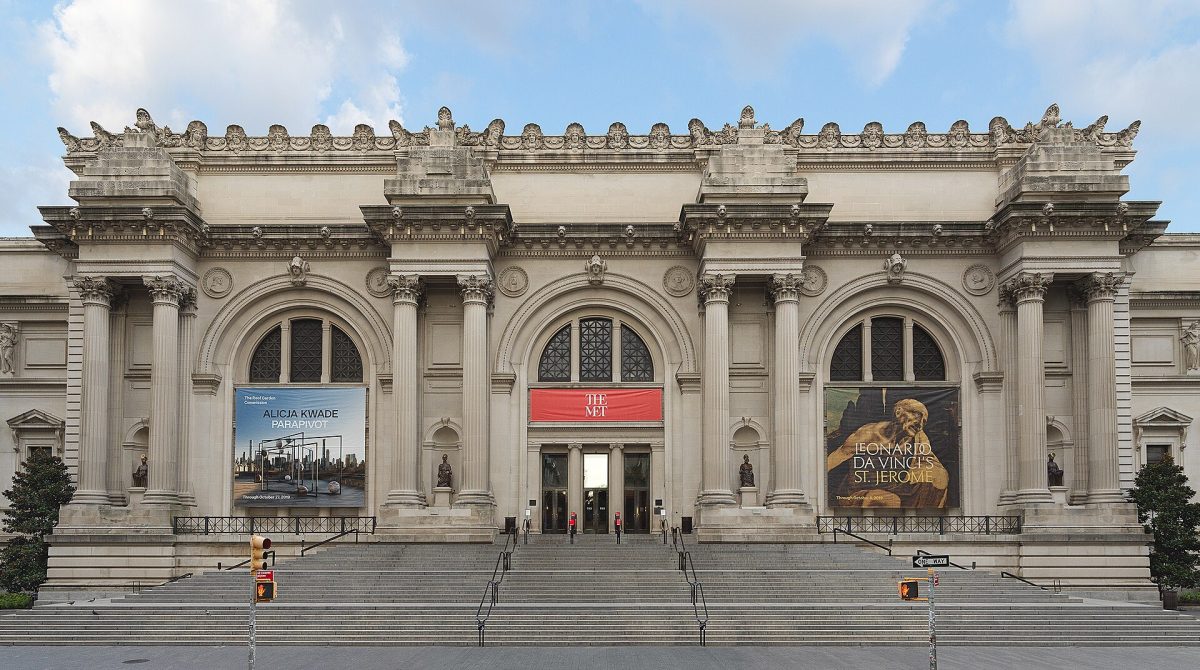
This year’s Met Gala was held at the Metropolitan Museum of Art (The Met) in New York City on May 4, where celebrities from the fashion, entertainment and tech industries came together to showcase this year’s dress code, “Fashion is Art.”
The Met Gala is an annual celebration hosted on the first Monday of every May. The event is centered around raising money, specifically for the Met’s Costume Institute. It originated in December of 1948 as an evening dinner that cost $50 to attend.
The fundraiser’s creator, Eleanor Lambert, visualized the gala as a way to fundraise money to maintain the Costume Institute and celebrate the beginning of its exhibit.
However, after Anna Wintour took over the event in 1995, the Met Gala hosted more notable figures in the film, sports, business, entertainment and music industries and celebrities began to make appearances. It became a celebration of Wintour’s trailblazing in the fashion industry.
Now, the Met Gala is one of the most exclusive annual fashion events, with individual tickets skyrocketing to the cost of $75,000; and tables, which are commonly purchased by fashion houses, brands that are known for creating and selling high-end items, costing $350,000.
Interestingly enough, there is no absolute way to be invited to the Met Gala, and all guests and waitlists are regulated and decided by Wintour. The criteria for being accepted vary from accolades to cultural clout.
Alongside Wintour are the Met Gala co-chairs, who assist in organizing the guest list and creating the atmosphere with decor, curating the specific menu as well. The event co-chairs for this year’s Met Gala were Beyoncé, Venus Williams and Nicole Kidman, with Anthony Vaccarello and Zoë Kravitz as co-chairs for the gala’s host committee.
The biggest issue with this year’s Met Gala was the honorary chairs, which were unfortunately Jeff Bezos and Lauren Sanchez Bezos, who also happened to be the lead sponsors as well.
It’s no secret that Jeff Bezos is one of the richest people on earth with a whopping net worth of $277 billion, which is money “earned” from the exploitation of Amazon workers. The true irony, pointed out by many critics, is that Amazon is one of the trailblazers in the fast fashion industry, which goes against everything the Met Gala should stand for.
Not only is his sponsorship making the Met Gala hypocritical, but it makes it tone-deaf as well. As mentioned before, the Met Gala is held in New York City, one of the most expensive cities in this country. Like other cities, it is experiencing a drastic income inequality and affordability crisis.
To have an event sponsored by Bezos, who is known for overworking and underpaying his workers on the streets of New York City, is not only a slap in the face to Amazon workers, but to every American in this country who is struggling to afford gas, food and other necessities to survive.
However, this distasteful sponsorship did not go unnoticed by New Yorkers. Before the Met Gala was even held, boycott signage stating, “Boycott the Bezos Met Gala,” and “The Bezos Met Gala: Brought to you by the firm that powers ICE,” appeared on subway cars, walls and buildings. Protesters also allegedly hid fake bottles of urine, alluding to the allegations of Amazon workers having to urinate in bottles to keep up quota demands.
On the day of the Met Gala, protesters even gathered near the museum with signs stating, “Tax the Rich,” while vocalizing anti-billionaire sentiment. Even New York City mayor, Zohran Mamdani, declined his invitation to the Met Gala, choosing to focus on bringing affordability to the city and highlighting the importance of behind-the-scenes workers in the fashion industry.
Unfortunately, at the protests, Amazon Labor Union Organizer Chris Smalls, who is known for fighting for workers’ rights and his stance on Palestine, was tackled by the police and arrested at the Met Gala for allegedly attempting to storm the red carpet.
Chris Smalls was not the only notable figure to make their bold stance against the Met Gala clear. Veteran actresses, Jennifer Lewis and Taraji P. Henson, rightfully called out celebrities who attended the 2026 Met Gala, criticizing them for participating in a billionaire-backed event while people are struggling with effects of inflation, employment and other hardships.
This energy is truly what was necessary for this year’s Met Gala. Billionaires and celebrities have been utilizing the Met Gala as a charade for charity, when in reality, it has become one of the most performative fundraisers in the fashion industry; it is simply a PR stunt or a moment for celebrities to garner the most shock value.
Another critique about this year’s Met Gala was the debut appearance of billionaires, Meta’s founder and CEO, Mark Zuckerberg and Google’s co-founder, Sergey Brin, both giants in the tech industry. The fact that they are billionaires is not the only controversial aspect. Their role in the tech industry is problematic, especially with the rise of generative AI.
Generative AI is not only harmful for the environment and marginalized communities, but also for the art industry in many ways. It is a wasteful tool trained on copyrighted art, threatening the livelihood of artists and devaluing the effort and creativity put into creating all forms of art, including fashion.
Zuckerberg and Brin’s appearance at the Met Gala is a physical manifestation of how generative AI is disrupting and invading the art and fashion industry, and Wintour’s decision to invite them into the Met Gala was distasteful and not representative of honoring, respecting and preserving art.
Instead of people viewing critiques of this year’s Met Gala as an attack on fashion and charity to the arts, they need to use it as a reflective period and deconstruct their celebrity worship and find ways to support fashion and art in their local communities, rather than only when it’s on “expensive” bodies.